|
Why Permaculture in the suburbs? Some quick thoughts. It seems like for a long time a lot of case studies on Permaculture were based on people moving out of built up areas and developing land in more remote areas where they could aim for self-sufficiency. That's great, but for most people the benefits from living in community, around other people and with services that can be delivered more effectively (and with lower impact) at higher density are more important. Plus, there isn't room for everyone to move out to rural locations, especially if we need to adapt quickly to a new emerging normal as our traditional systems and structures break down. Transforming our middle density residential areas into havens for the natural world and thriving, sustainable and diverse ecosystems that support us and the rest of nature has so many benefits. Imagine a world in the very near future where long distance transport is much more expensive making food scarce and supplies intermittent. Where energy, medicine and employment are interrupted and we need to adapt to shocks in the short term and shifts in the longer term. Suburbs can be heaven or hell. We can use the model of forest gardens to support us and our communities and make them a heaven. They can support us through shocks in supply. (Growing veg is hard work and you can't do it instantly - when harvests and supply chains fail that happens quickly.) Planting beautiful, productive and life sustaining gardens can give us shelter and sustain us and support biodiversity. Roads will get quieter. We won't all be driving electric cars. We'll be on bikes and cargo bikes, swapping plants and grafting trees, sharing produce and gardening tips, sitting in the shade and planning for our communities. The sooner we start, the easier it will be. 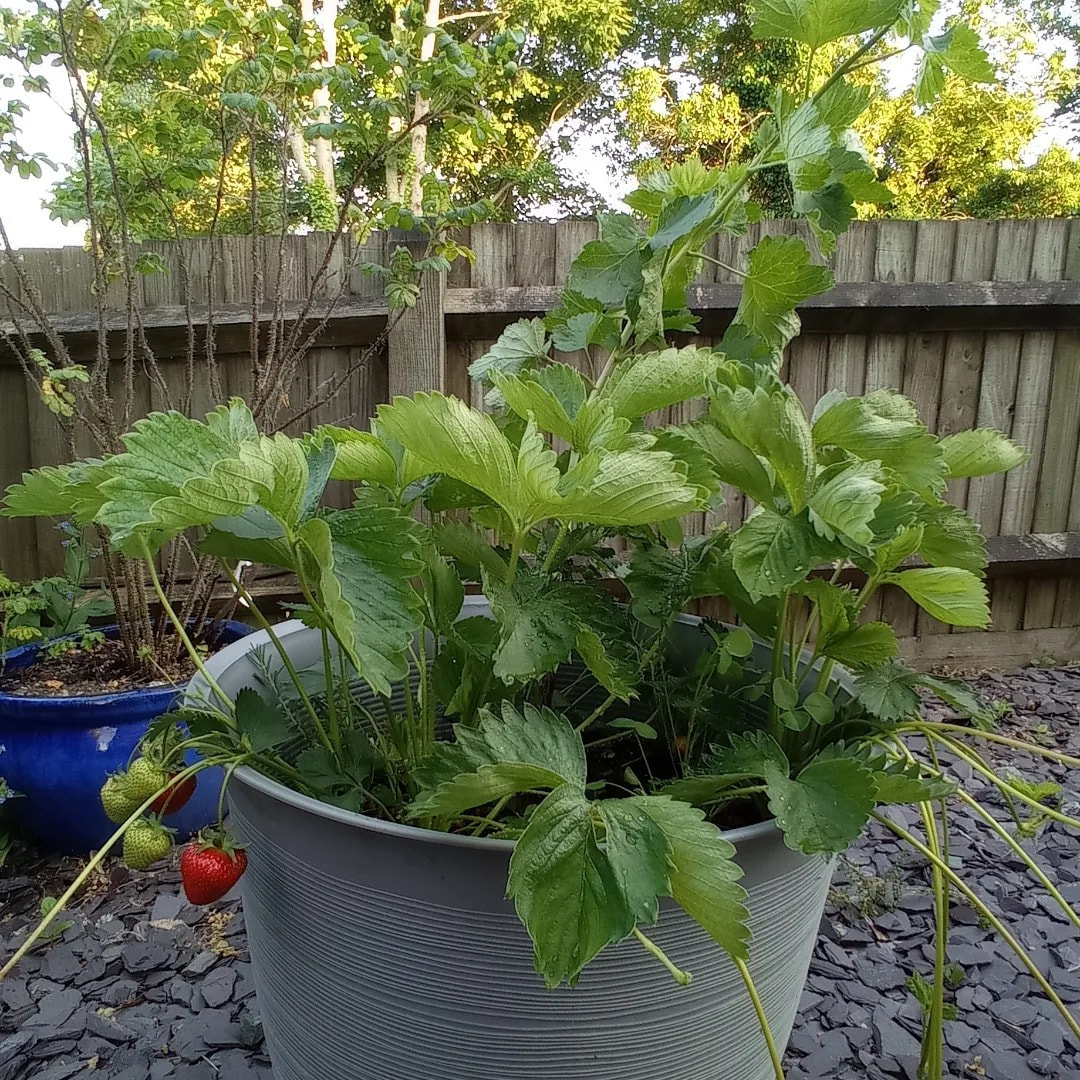 You can start small too. A planter with a jostaberry (my all time favourite low maintenance, vigorous and productive soft fruit bush), strawberries and trailing rosemary (shy at the back)
1 Comment
I've always been interested in how we garden and how it might be different. I stumbled across books about permaculture in my teens in the 1980s and remember watching a video of Bill Mollison surrounded by a lush productive garden picking fruit where he lay. That idea of natural abundance lodged deep in me. I fell in love with that idea. I read a lot about permaculture and Robert Hart's amazing forest garden in the UK. I worked on a few farms and permaculture projects in summers between studying. I even started a course in sustainable agriculture but I didn't stick at it. I was coming to terms with a diagnosis of Type 1 diabetes in my early 20s and in those first months and years I found it really hard to concentrate. Life moved on. I came back to studying a little later. I focused on environmental chemistry and environmental health. I ended up using mathematical models and I find working with numbers natural and easy. I've got the kind of mind that can do that stuff. As much as I was interested in permaculture and different ways of growing I couldn't see a way to make a living doing that in the UK. I'd grown up in the suburbs of London and I didn't have any connections with the land or farming. I didn't have farming in my family background. I put the idea of permaculture and forest gardening to one side. A few years later, I found myself in my thirties settled into a home with a family in Salisbury, Wiltshire. I'd lived in the area for about five years and our two boys had started school. We had moved into a new place and it had a decent garden. It seemed like a good time to revisit the idea of a forest garden. We had no plans of moving for the next few years and the kids seemed happy where they were. Even with such a stable set of circumstances though it still felt like a leap into the unknown. I'll try to unpick some of the competing thoughts here and in future posts. My vision was to create a garden that could help support us as a family. I knew enough to know it wasn't going to meet all our needs for food but that wasn't my aim. I was interested in what could it produce, almost as an experiment. There's always been an ideal of self-sufficiency that people have explored but I'd learnt enough to know that small-scale subsistence is hard work. I was interested in how growing perennial plants could provide for some of our needs but without becoming a full time job. With two kids and two jobs we had plenty going on so could the garden work for us with only a small amount of time. So my initial motivation was to explore the promise of what could a back-garden scale, suburban forest garden provide with little effort. I was really focused on designing the garden and the plants to make the best use of the space to provide a harvest for much of the year. You can read a lot of the practical choices and the development of the garden in previous blog posts and on this website. In retrospect though, I realise that this is only one part of garden design. Permaculture focuses on identifying requirements before the design begins. I had thought about those in practical terms like physical produce from the garden but there are so many other elements that play a part. If I were starting again now I'd think about a lot of other things like: How will it provide a space for everyone in the family? How much time will it take to establish and maintain? Who will do the work? What are people's expectations for a garden? This last one is really interesting as we all have different ideas of what makes our ideal garden. We have influences from our childhood, gardens of parents or grandparents, allotments perhaps; visiting big formal gardens or walled gardens, (often with teams of gardeners); experiences of nature and woodlands with different degrees of management. A garden might be a place of sanctuary from a difficult outside world, a place away from people or alternatively a place to celebrate with people. It might be a place loaded with cultural expectations where we feel being a 'good person' means keeping things tidy or maybe we just like things to be neat and clear, a calming space and a buffer between us and the outside world. None of these are right or wrong but they are important to be aware of and consider before making conscious choices about how we garden. I'm sure there are plenty of other reasons too. Gardens can be places that are teeming with natural life, overflowing with abundance and are beautiful; that hold us, support us and make us feel safe; provide places for play, togetherness, being solitary; absorb the things we no longer need; provide for many of our needs and allow us to be in nature and reflect on interactions with it our place as part of it. That kind of garden though looks quite different from our more traditional ideas of a suburban garden and to someone looking at it through a different lens that might not be clear. It might even feel threatening or look like neglect. There is work to do for us to share that vision of how a garden can be and of our place within it. But there are so many ways to draw people into that view. Ultimately a garden exists as part of a wider world and in a community. Imagine a world where everyone looks after their space to support themselves as part of nature. It would be the most beautiful place to live and would support us all, providing much of what we need, supporting the diversity of the rest of the natural world and allowing us to work within our wider community. The two videos below show an early time lapse video of one day in the garden in winter 2010 shortly after tree planting, then a time lapse through the year of the developed garden. The last time I wrote anything here was more than four years ago. A lot has changed for me since then and it's still difficult to explain it all. I left my marriage and my home. I left the garden I had been developing for more than 10 years. I couldn't tell you why, but I knew on some level that I had to. I'm still coming to peace with all of that, the feelings of grief, shame and regret but also the power of stepping into the unknown and the gratitude for the kindness and gentleness of others that heals. I haven't made sense of all of it but, I keep coming back to the need to tell the story of growing a productive domestic suburban forest garden. How it can transform a space and integrate people back into nature, supporting their needs and softening their impact, giving them a real space to heal. How the process is one of letting go of control and how it can transform us. It seems like that story wants to be told and, as painful as it is, I realised that I need to tell it now. I made a commitment to myself this weekend to start that process. I'm going to be working on a presentation to support the telling of that and sharing it with anyone who wants to listen, who is interested in a better way of living that helps us transition to a sustainable future, supports us as we do it and helps to heal some of the damage we've done. I will share the lessons I learned along the way, what worked, what didn't, how I would do it differently now. I'll tell it alongside my personal story because I can't separate that from the story of the garden. I'll also share my thoughts about how this plays out at a bigger scale and why it can change everything for the better. I'm planning on telling that story in person at talks and workshops, in videos and any other way that makes sense. I'll use this blog to put together the pieces and would love any feedback. With much love, Simon. 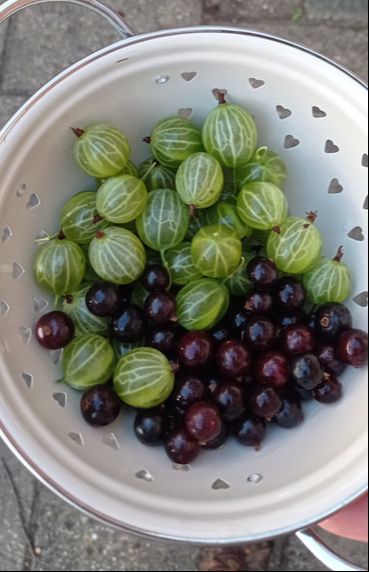 The sharp and the sweet. Gooseberries and chuckleberries from a new garden In Salisbury we are really lucky to have the Secret Garden, an amazing community garden project with a focus on wildlife, history, arts and education. It has recently been named by The Telegraph as one of the top 10 bee friendly gardens to visit in the UK and the fantastic city bee trail associated with the garden has won awards for its really clever way of promoting information about the range of wild bees in the UK. Yesterday the garden held a May Open Day to celebrate the opening of the garden for a new season. There were all kind of events on as part of the day from talks on the history of the former churchyard, storytelling, singing, arts and crafts, advice on composting, bee experts and lots more. I got the chance to tell visitors about forest gardening while they looked around the garden. I had a hastily made up information board and loads of forest garden books for folks to browse. I met some lovely people and there was a lot of interest. The gardeners and allotmenteers could all relate to the need to have a garden that worked for you not the other way around. The board drew people in to start with and wanted to know more about the idea. Specific plants were a real talking point too - lots of interest in jostaberries and Babington leeks. I think I've promised jostaberry cuttings to most of the people I met - I'd better get busy! 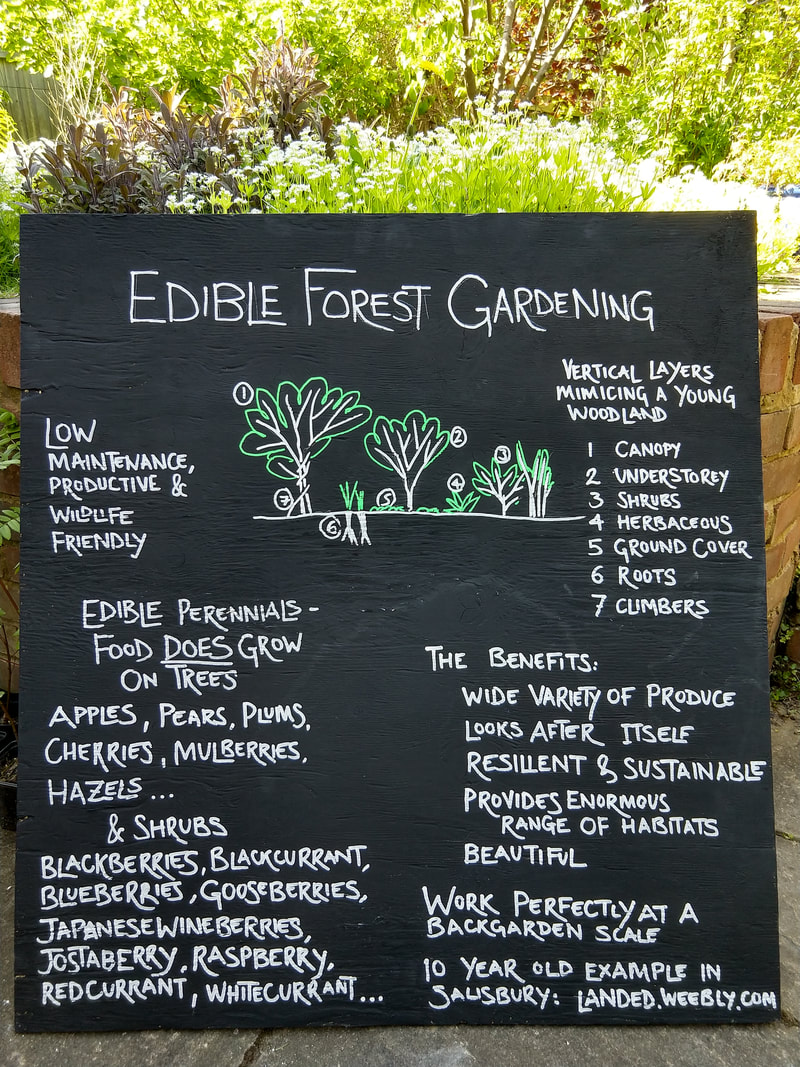 Forest gardening on a board 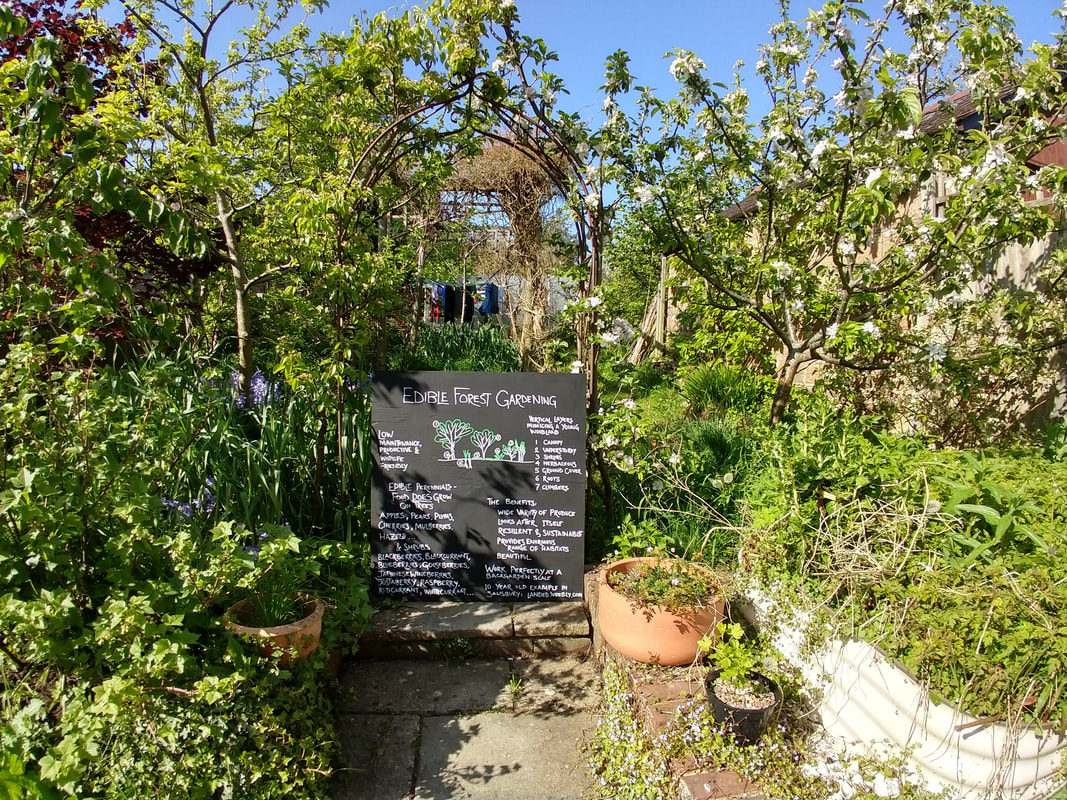 The forest garden in early May 2018 I have a shallow pool in a shady area at the front of the garden near the kitchen window. The original intention was mostly aesthetic - to reflect views of the garden and sky when seen from the kitchen. Over time though I've realised it serves other functions. It provides a great way of instantly telling what the weather is like. If it's raining there are splashing drops and ripples. If it's windy there are ripples on the surface. It reflects the sky and cloud cover and when it's really cold it freezes. All of that adds interest but it also provides a source of drinking water for everything from flying insects to birds and cats. When the weather is hot and dry this is invaluable. A few small stones around the edge help insects like hoverflies and bees land and have somewhere safe to drink from. Perhaps the most exciting thing is to see that the pool has become a habitat in itself. This is with no deliberate interference, no introduction of pond plants or anything else. The pool has become a more natural environment as leaves collect after autumn, particularly from the nearby quince tree. I've let these accumulate. It is a low maintenance garden after all. However, after the really cold late winter and snow here I was feeling like this was the wrong thing to do. When the water melted after that freeze I found many dead palmate newts floating in the pool. The pool is quite shallow and talking to friends I realised that for a wildlife pond there is a minimum depth of 60cm recommended if you are expecting frogs to safely overwinter. (There is lots of great advice on creating a wildlife pond here: http://www.froglife.org/info-advice/frequently-asked-questions/creating-or-improving-ponds/.) My pool is much shallower than that at maybe 15cm in the middle. It is also a thin metal dish so there is no insulation from the sides either. It was no surprise then that it froze in the recent cold spell. Having said that palmate newts do seek out shallow pools so it is not too surprising to find them in mine. I was thinking that I really should clear the pool out after the dead newts but recent events changed my mind. I was watching pond skaters on the surface when I noticed some movement under the water. After some patient waiting and watching I managed to record the video below. What I learned, with a little help from some wildlife expert friends, is that this is a palmate newt in the middle of its mating ritual. The rapid tail movement is wafting pheromones towards the female who is deeper in the pool, and who's head you can see clearly towards the end of the video. So, not only have I still got newts, it looks like there are going to be a whole new generation. I'm definitely not going to be clearing out the pool anytime soon! As the weather warms up I'm hoping to see a range of other insects like dragonflies and damselflies that are increasingly in the garden each year. I would definitely recommend a pond for any wildlife garden. It provides so many opportunities for a richer ecology.
So, prompted by the wonderful Bees Knees UK Community on Facebook, I thought about some New Year's resolutions and came up with the following:
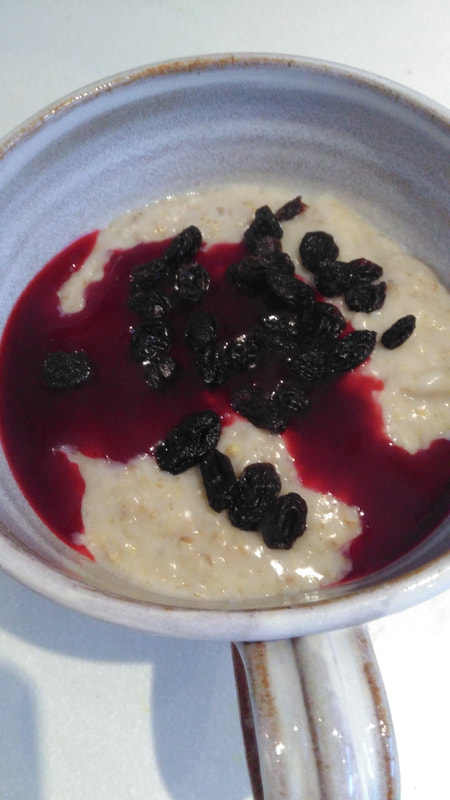
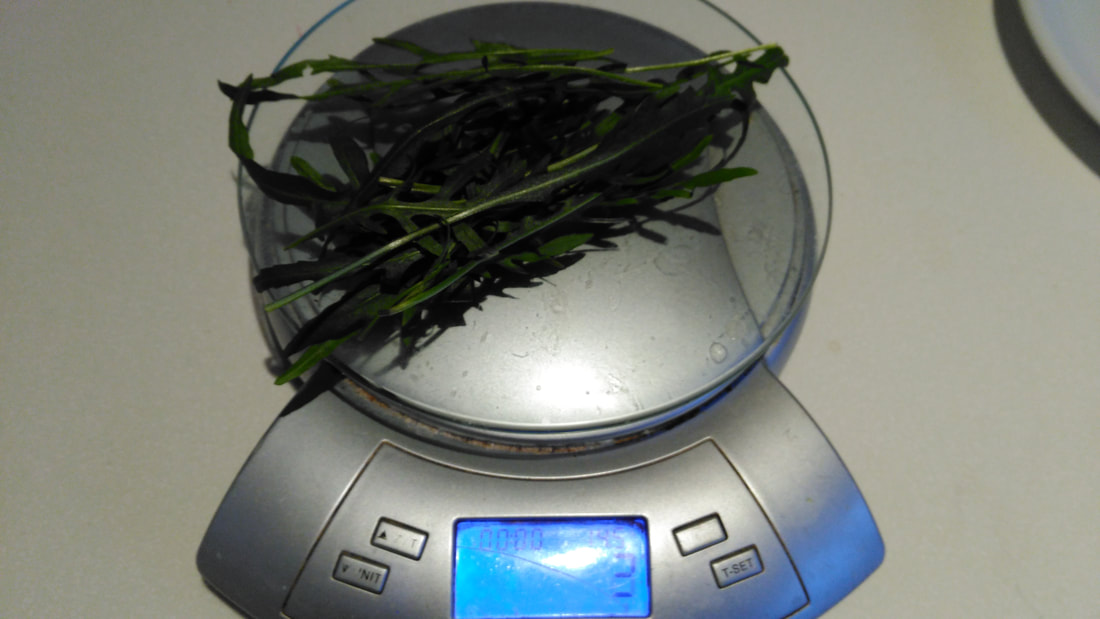
So for number 3 so far here is my progress:
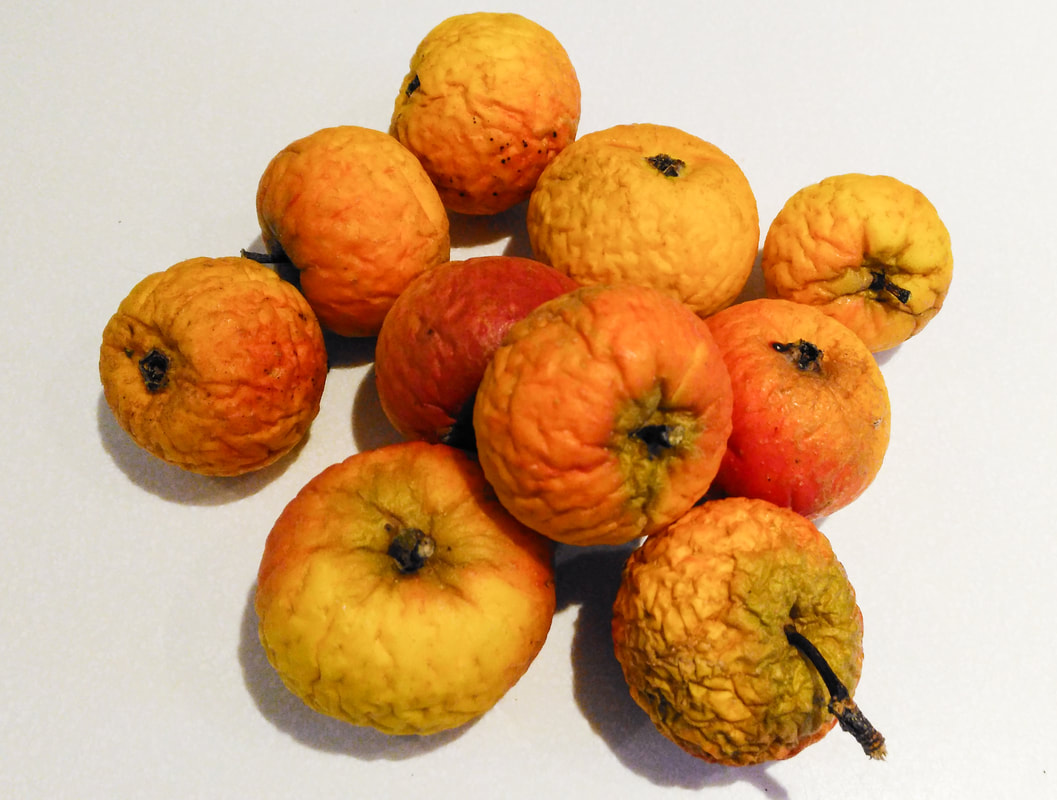
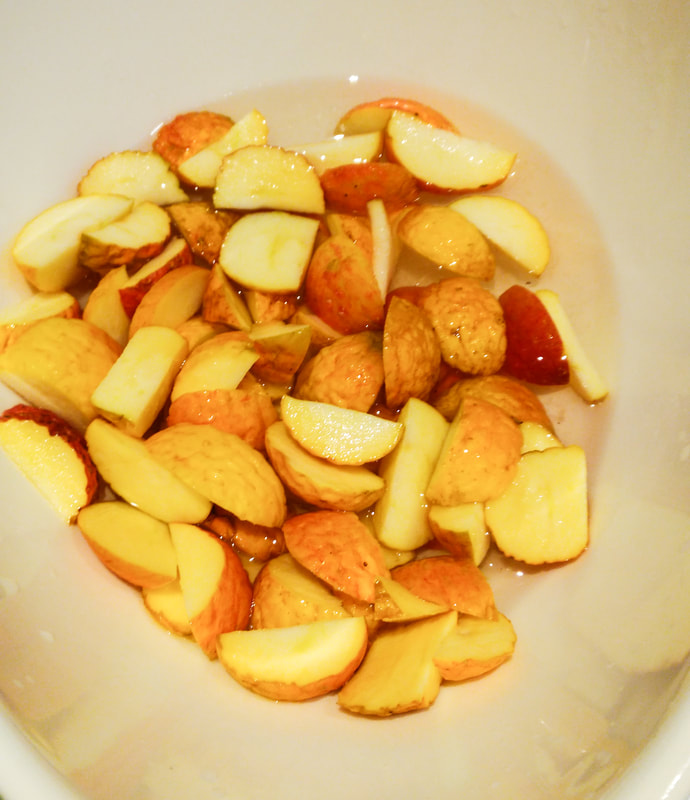
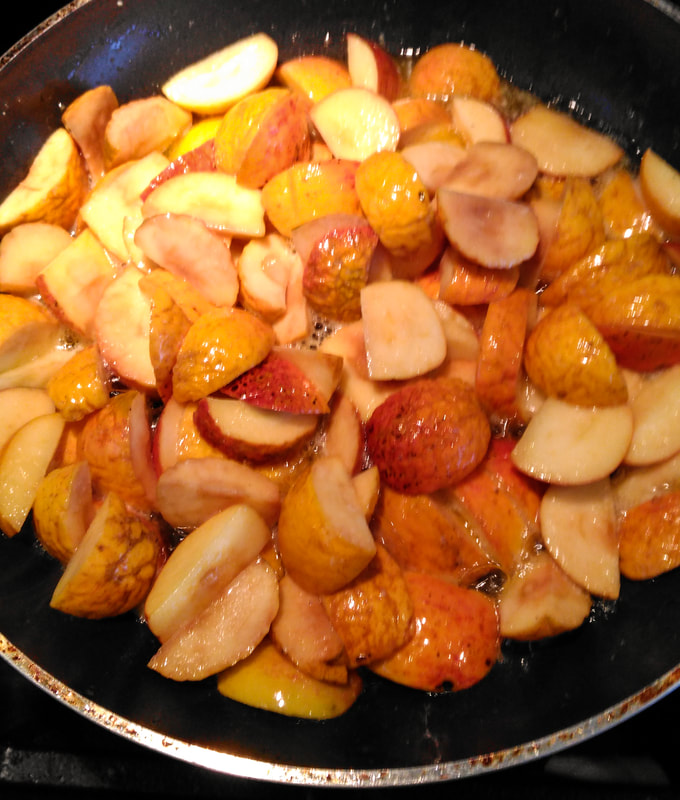
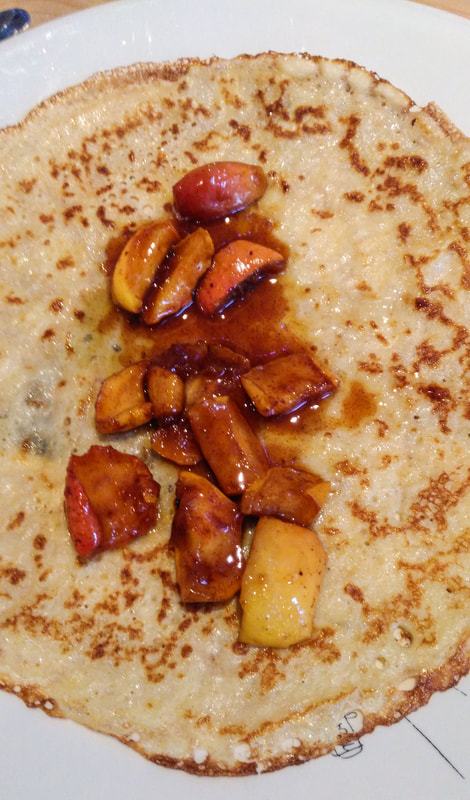
A gentle start. I'm obviously pacing myself, but think it's going to motivate me to see how I can eat a little differently and make the most of the produce from the garden as well as encouraging me to think about what else I can grow to increase the variety and yields throughout the year. Finally having enough apples to store for the winter has made me really happy this year! The Tydeman's Late Orange are keeping well in a cold garage on wooden shelves. The flavour has really improved with keeping. The skin of stored apples definitely changes and is quite different from shop bought apples. I did a little looking into how commercial apples are stored. It shouldn't really come as a surprise that commercial apple production, transport and storage is an industrial process but it regularly makes headlines when people realise that their fruit might have last seen a tree as much as 12 months ago. To keep apples looking fresh for so long the food industry uses controlled atmosphere (CA) storage where temperatures are reduced and oxygen content of the air is held below 2% (rather than the normal 21%). In some cases a very small amount of 1-methylcyclopropene is used to block ethene (ethylene) receptors on the fruit that trigger decay. This chemical reportedly has negligible human toxicity and is used as part of the SmartFresh system, sometimes in combination with CA storage (https://modernfarmer.com/2013/08/the-science-of-cold-apple-storage/). In many ways we all benefit from such sophisticated approaches to food storage and it enables our modern lifestyles. Having said that it is probably true that as a result we have mostly lost our cultural memory of how to grow and store apples on a domestic or small scale. That feels like a real loss as it is something that many of us can do to bring us closer to the source of our food. Growing and storing our own apples also opens up a whole world of different flavours and textures that aren't available from the limited range of commercial varieties. So closer to home, I've also stored quite a number of Court of Wick apples this year. These are a really interesting mid-late season eating apple that have also been used for cider. They are quite small with a yellowish skin. They have shrunk a little on storage and the skin has become a little wrinkly now, more so than the Tydeman's Late Orange. However, on slicing them open the flesh inside was in good condition with a nice texture and good taste. I decided it would be good to use some of these up to make caramelised apples to go with early morning pancakes. They turned out really well so I've put the recipe below. I based it on this recipe but didn't bother with peeling the apples or measuring. This was my version.
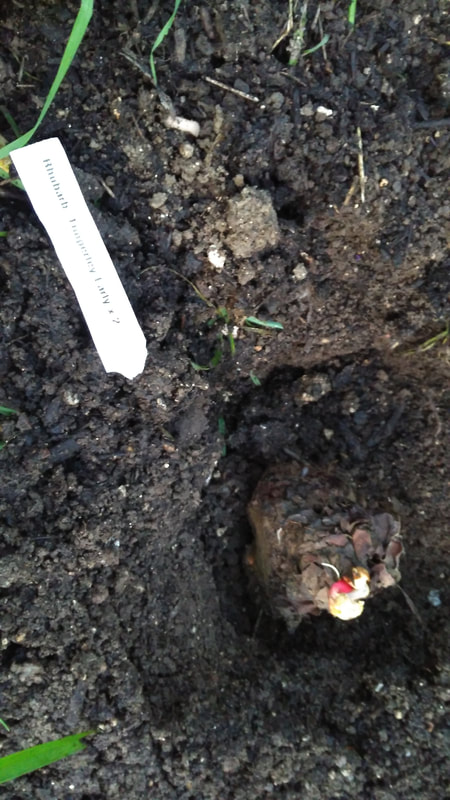
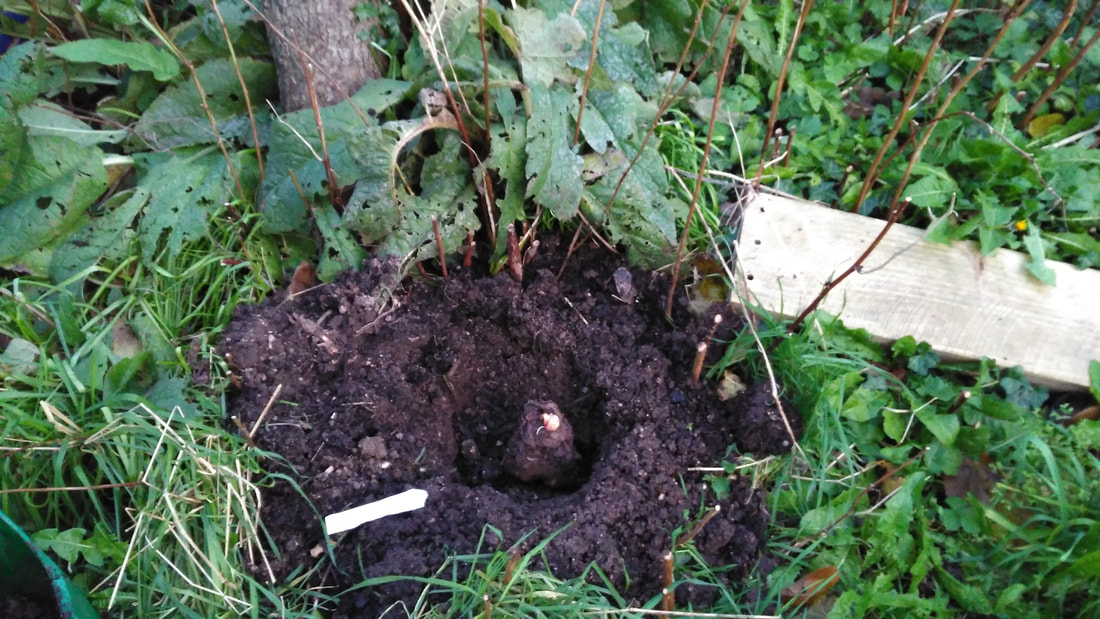
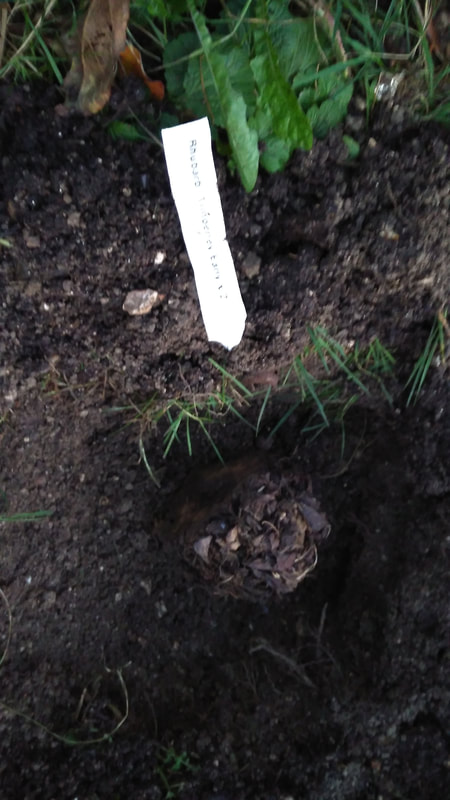
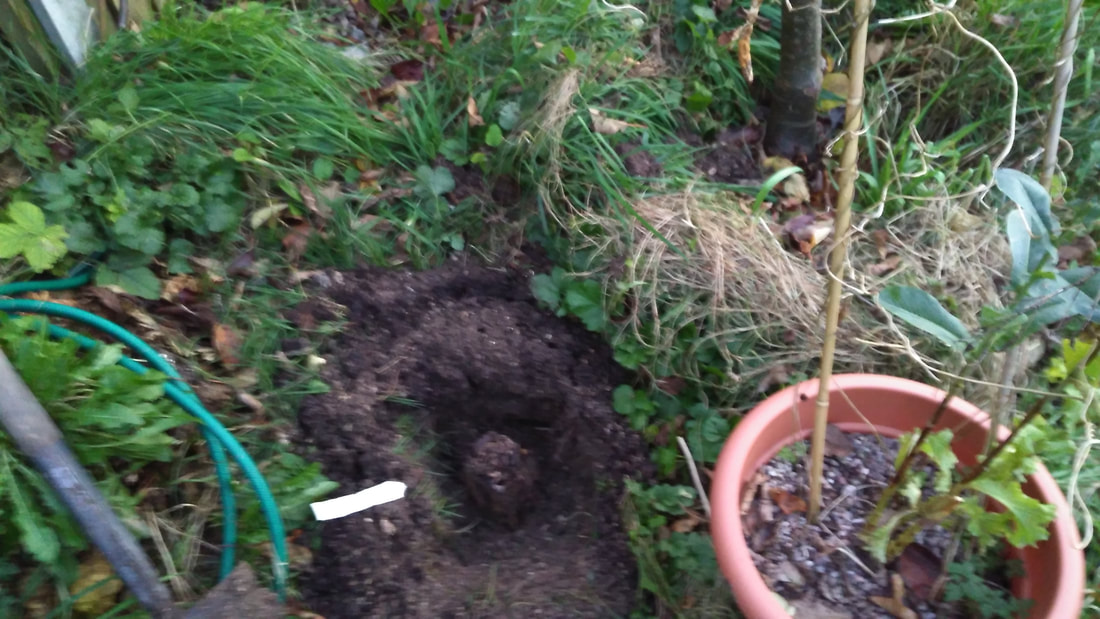
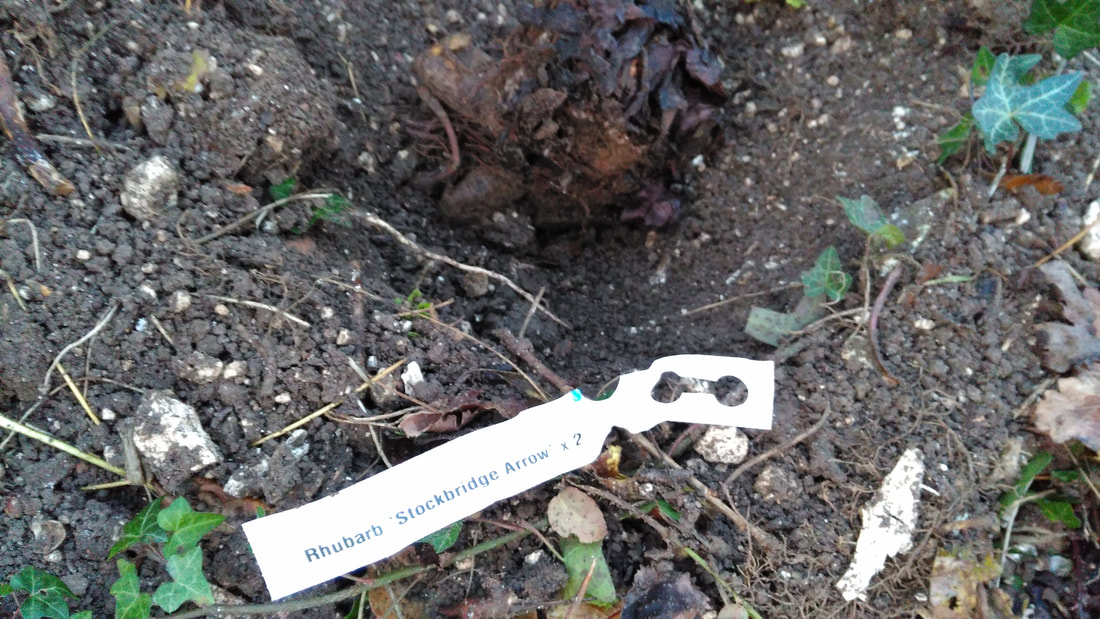
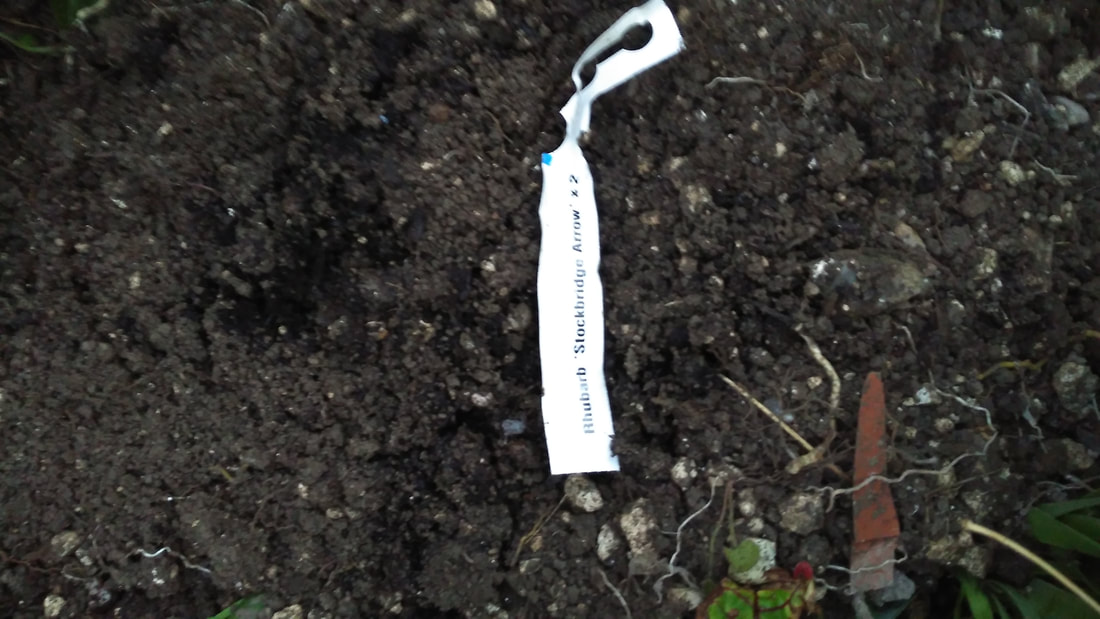
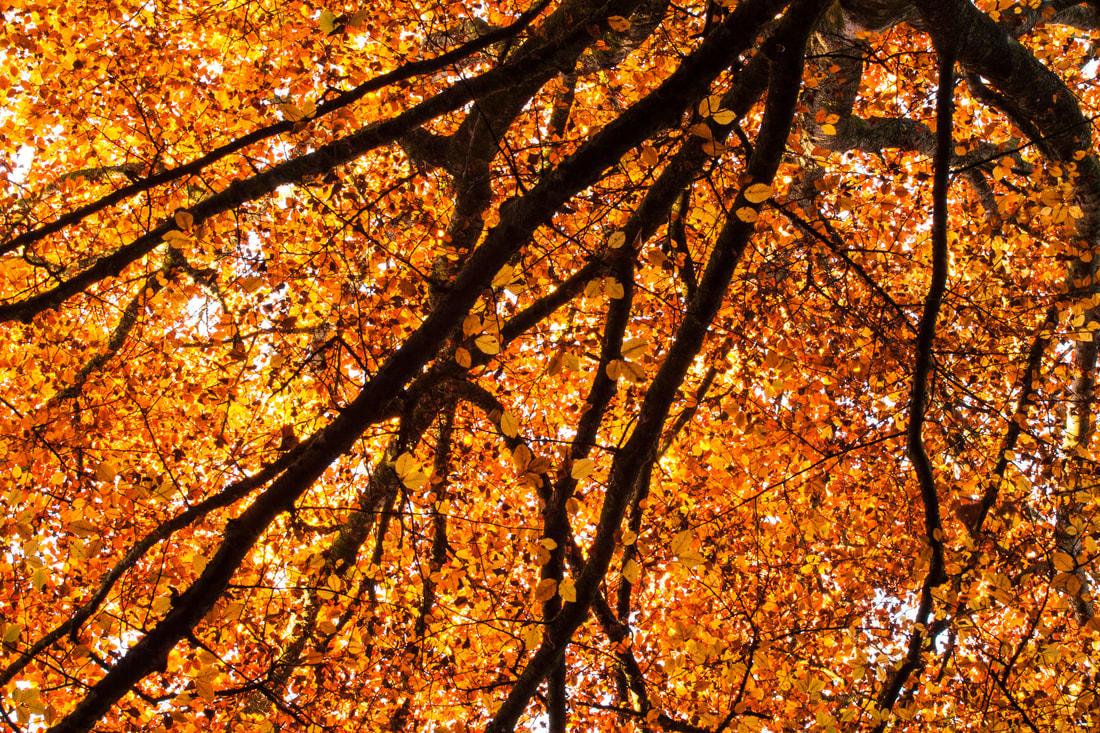
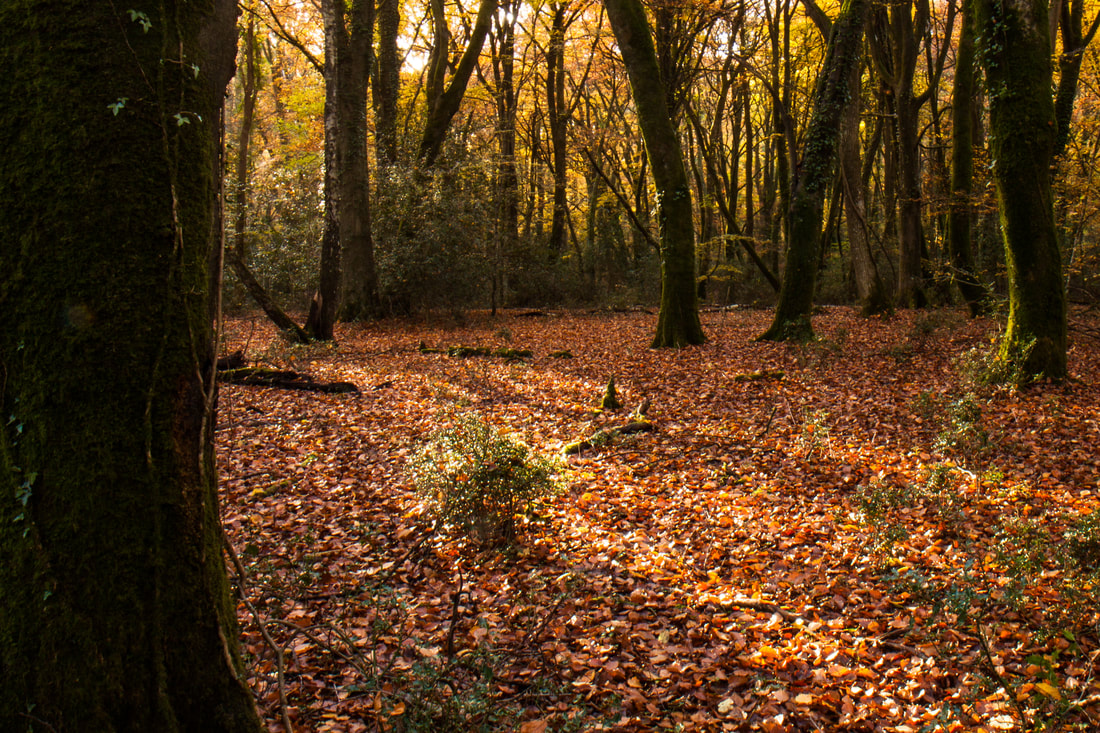
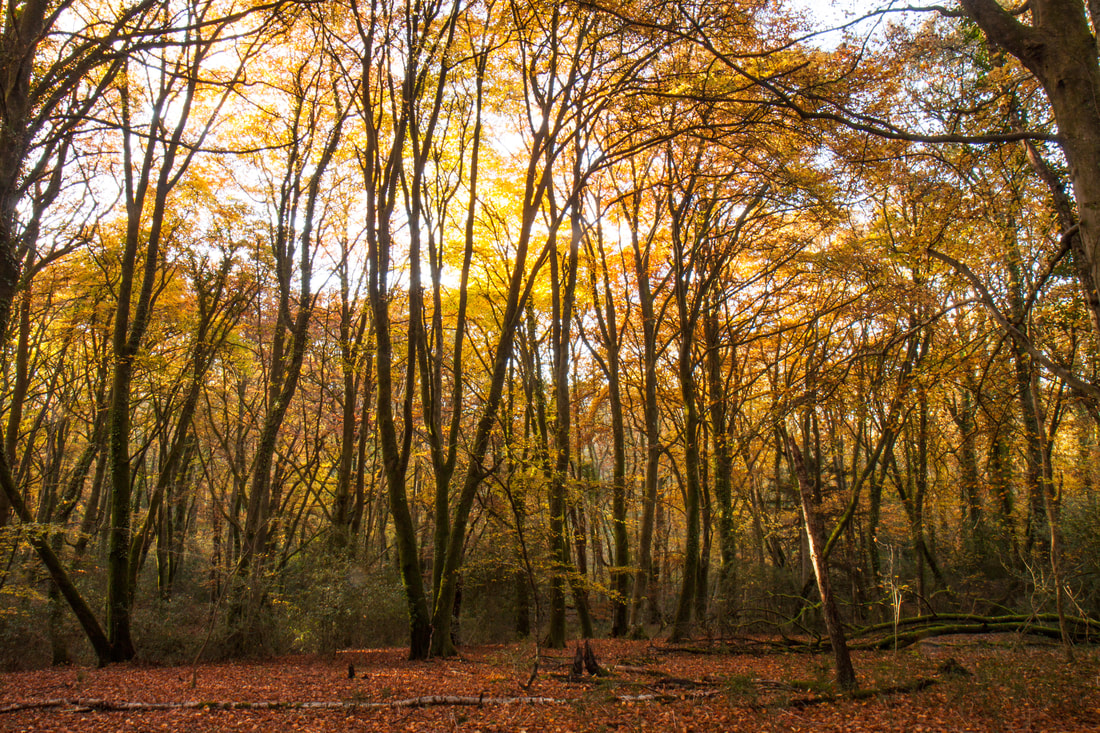
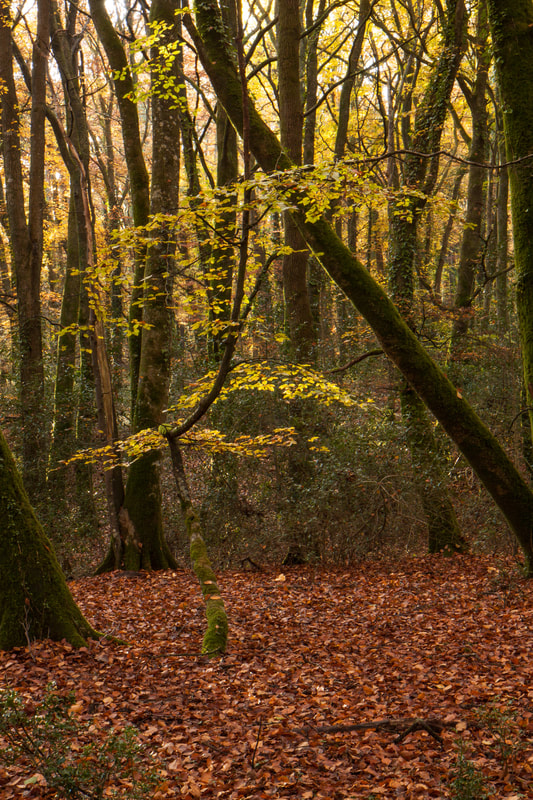
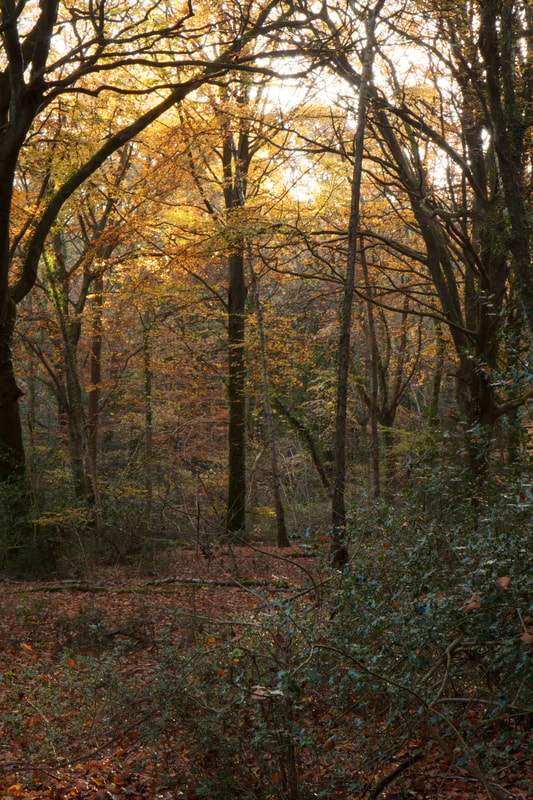
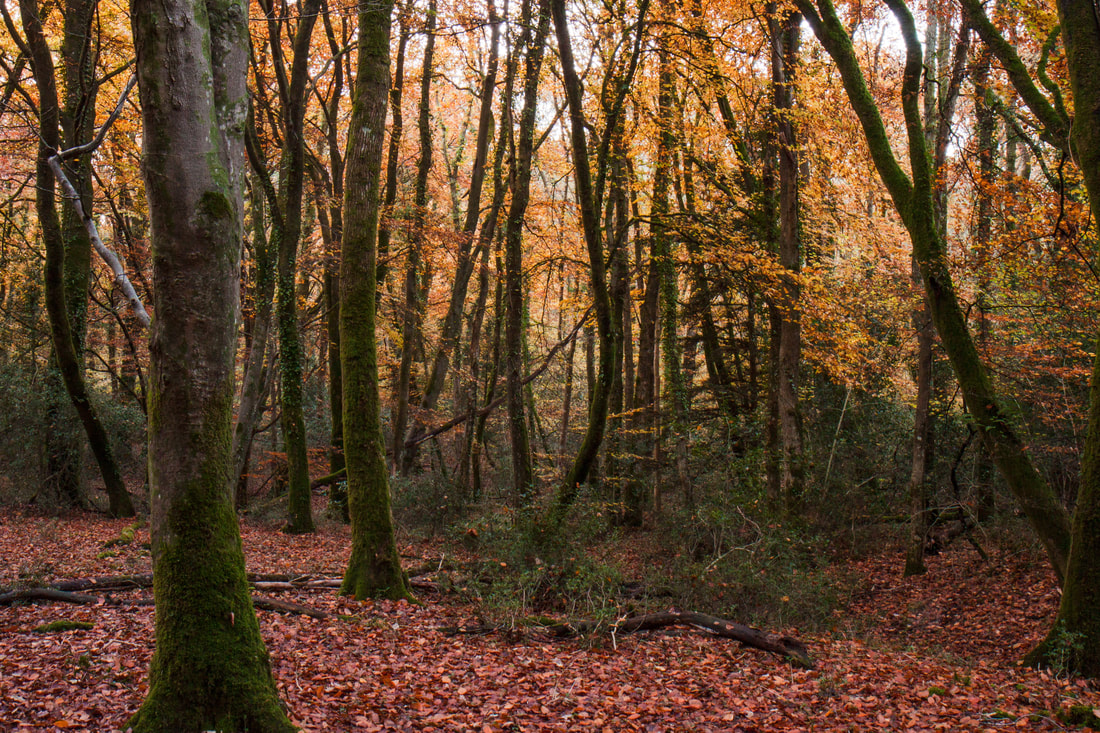
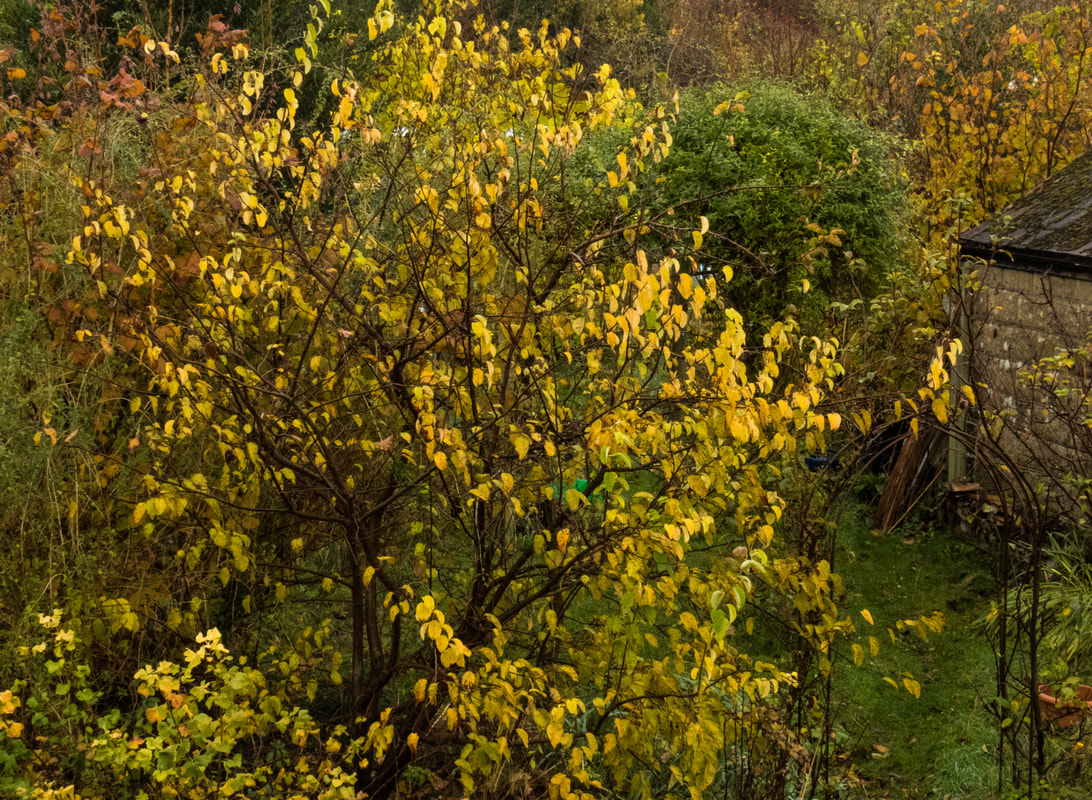
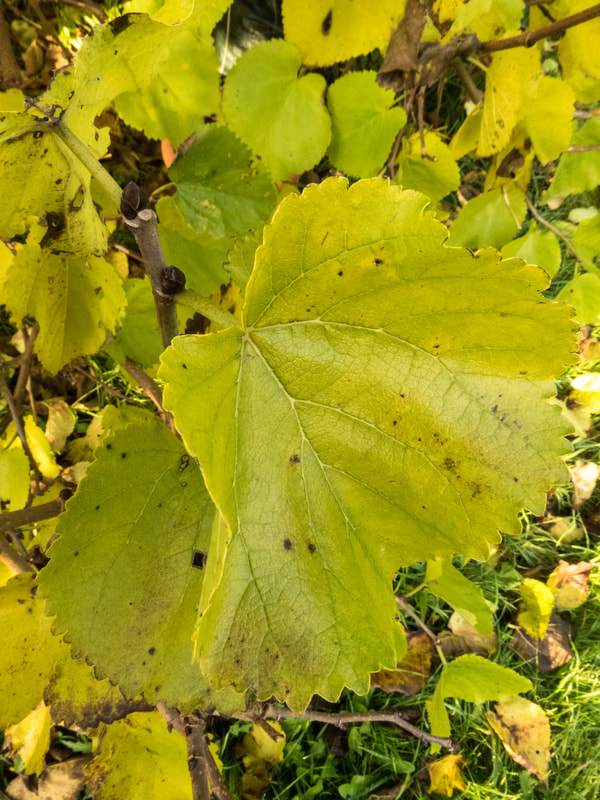
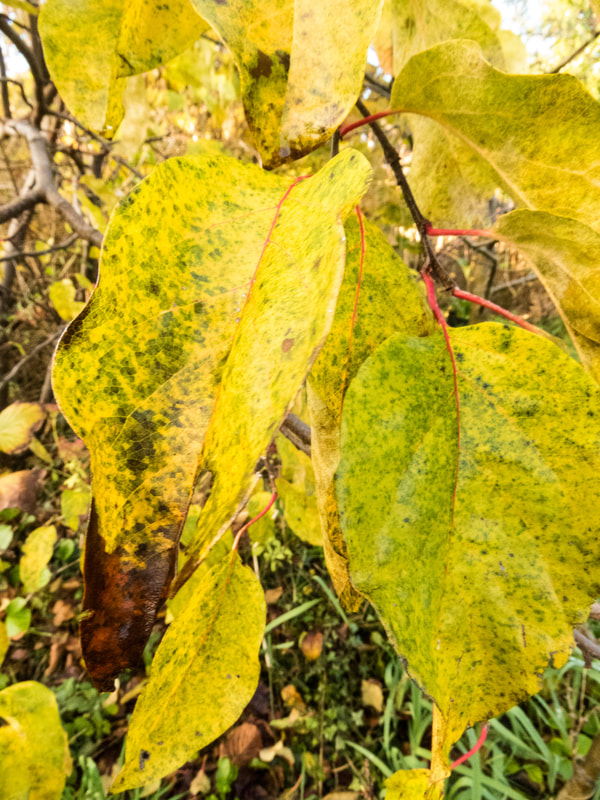
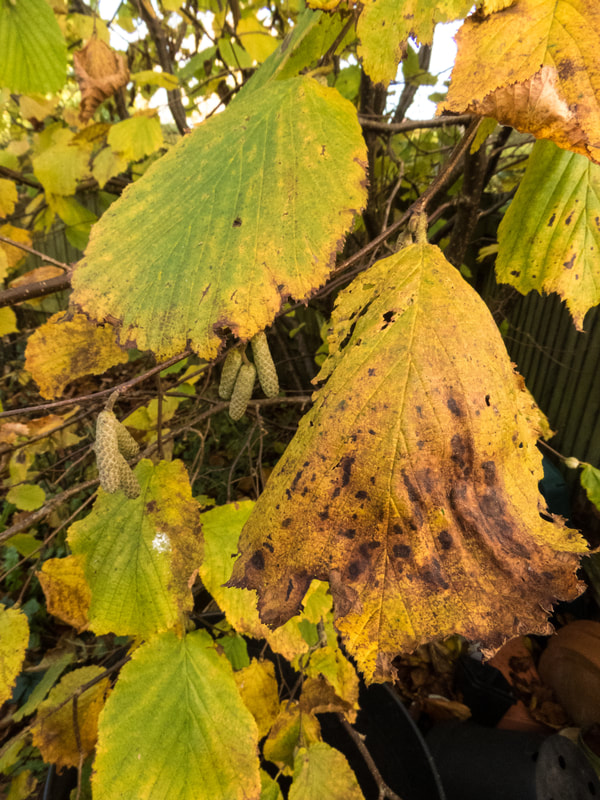
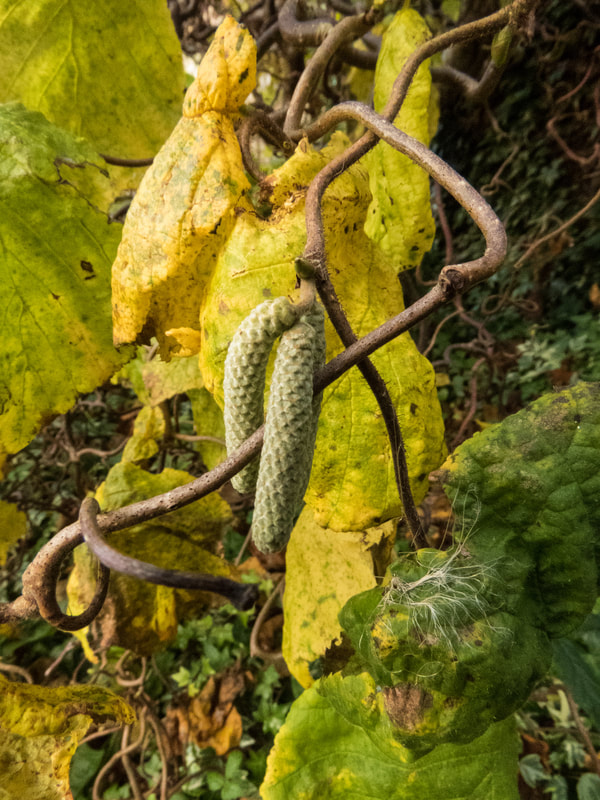
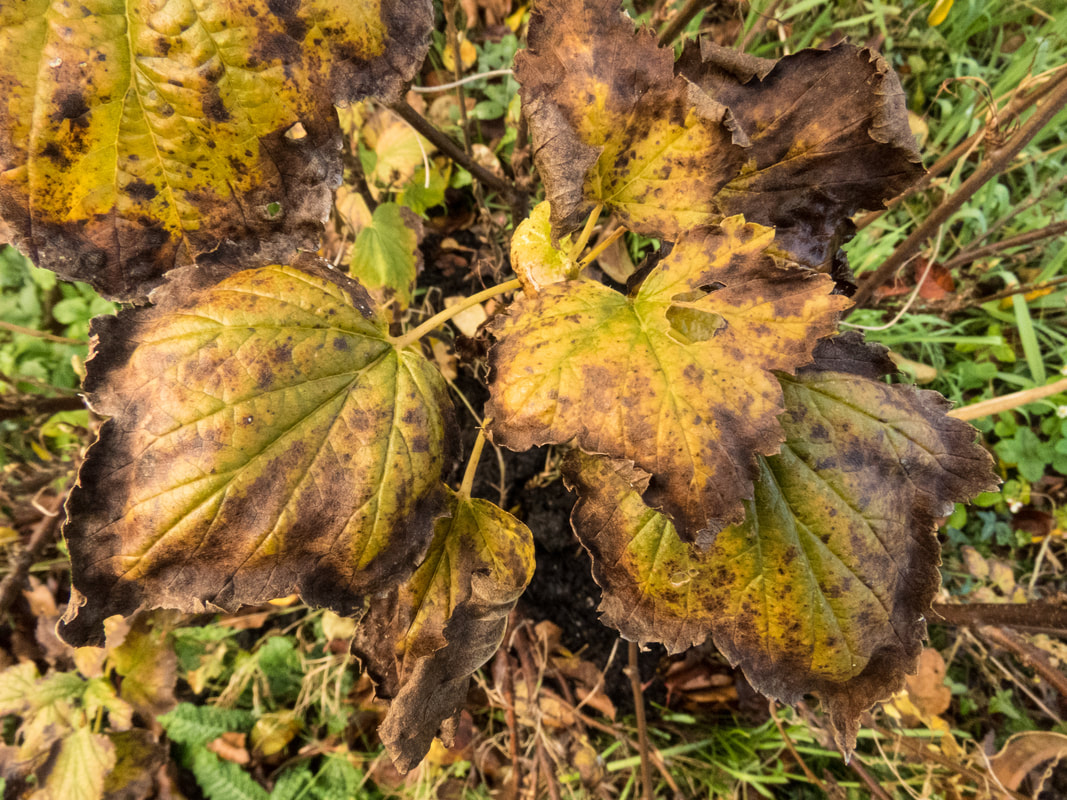
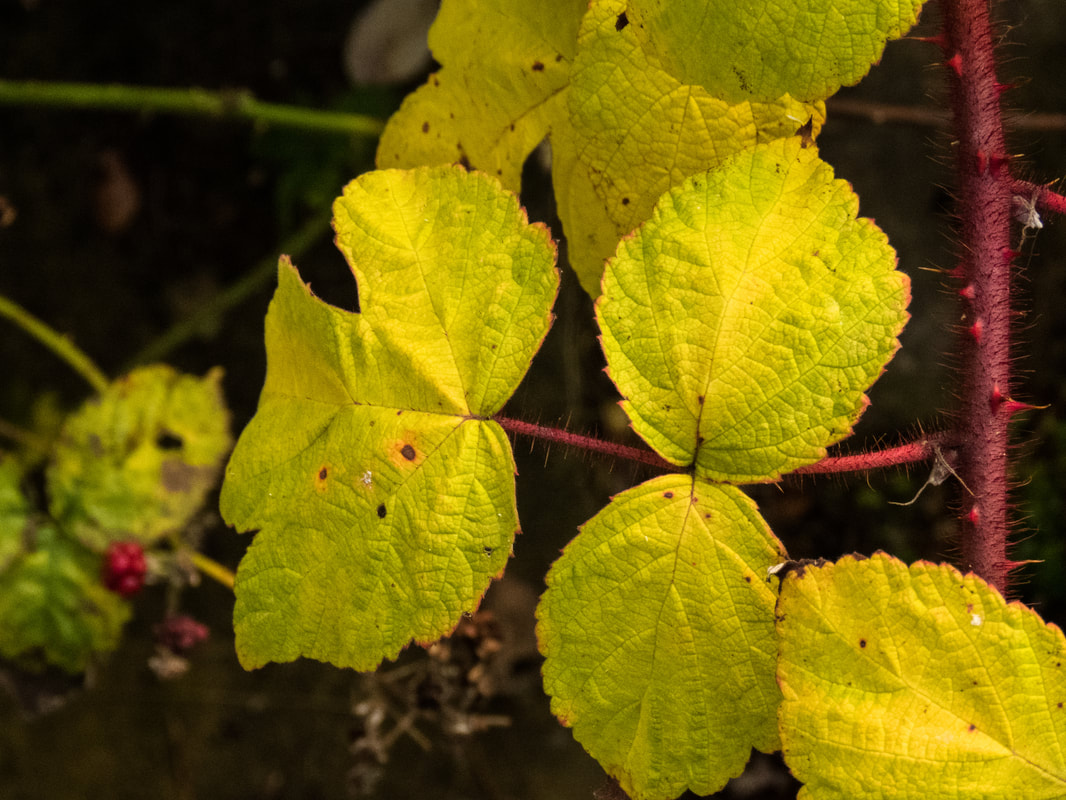
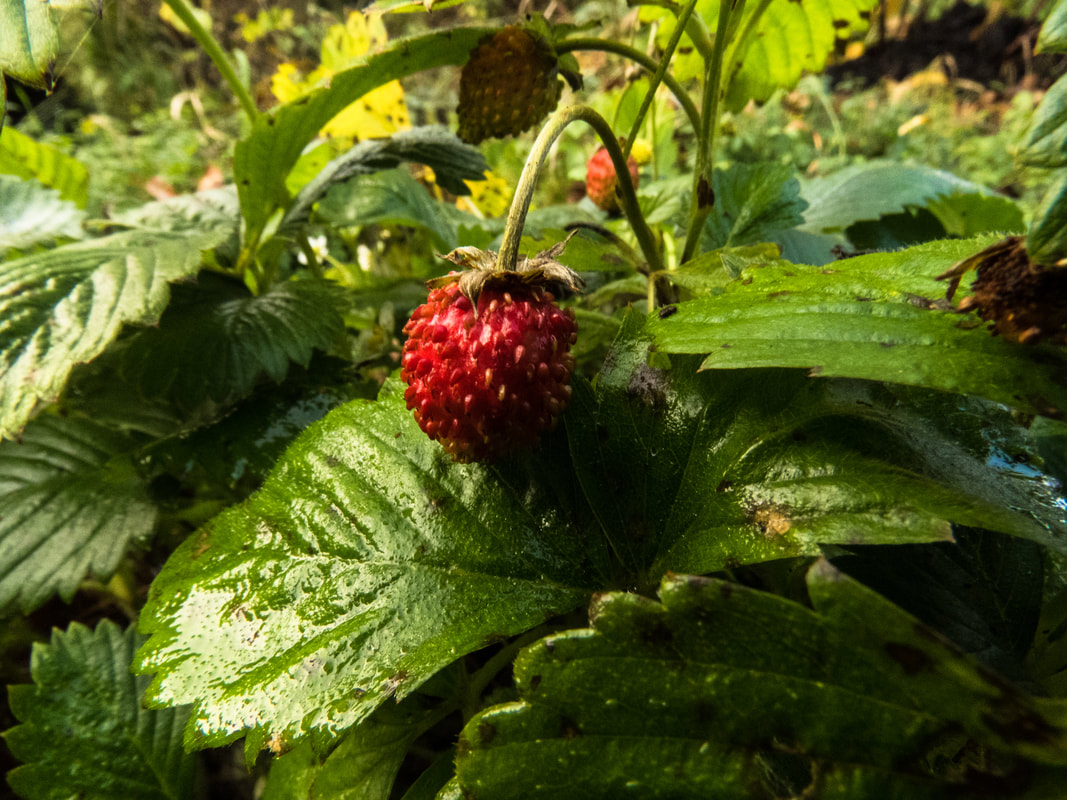
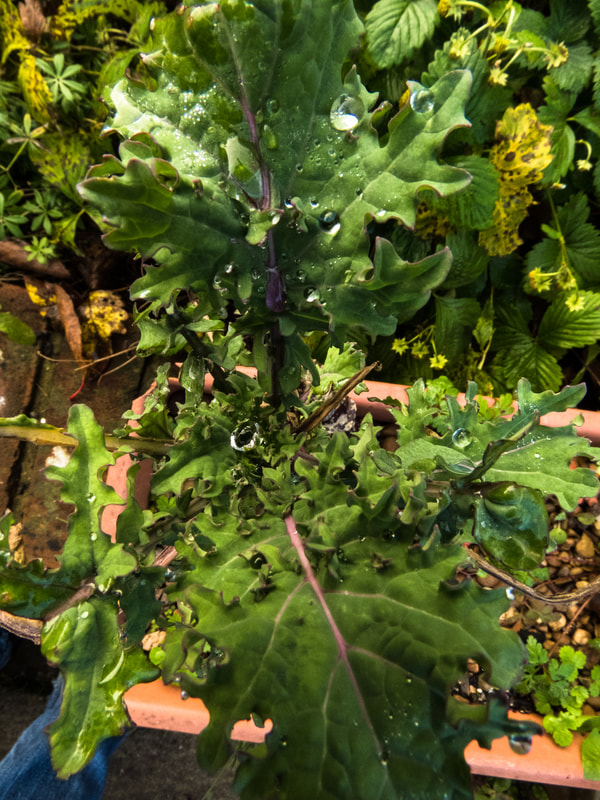
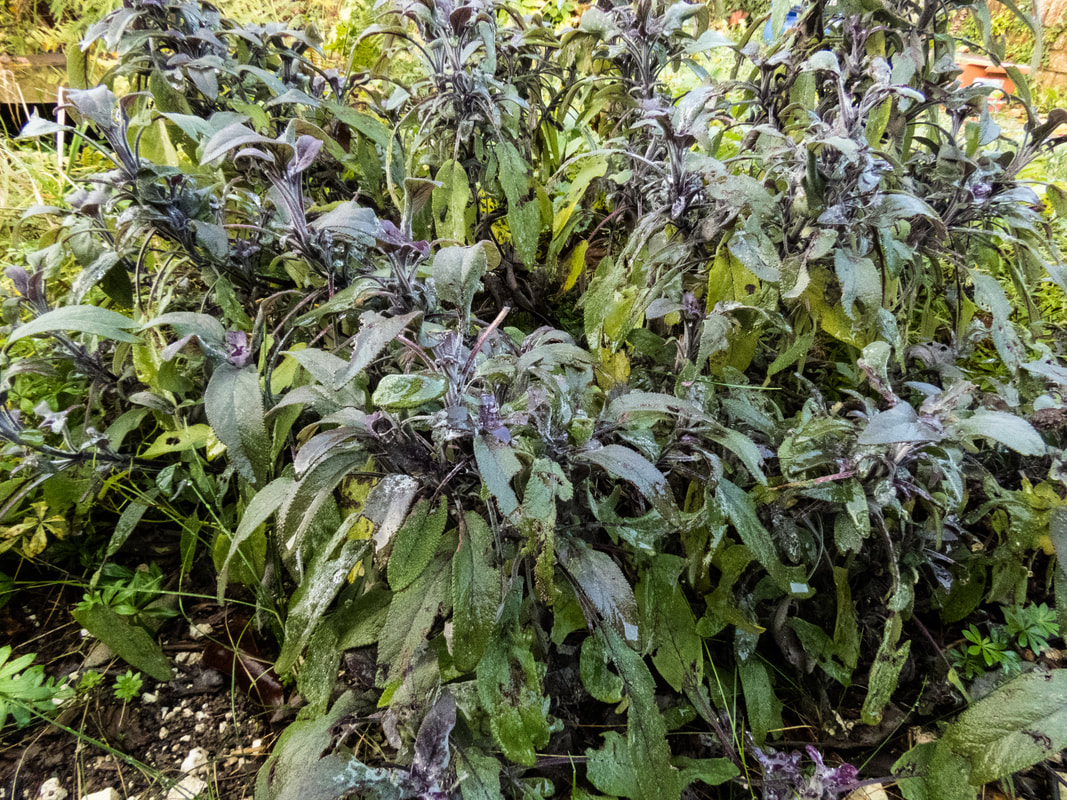
The flavour is like warm toffee apple. The apples have a sharp, tart flavour that goes really well with the caramel. The only problem was there wasn't enough to go around. Will make more next time. Last year I tried dividing my rhubarb plant to create one or two new clumps around the garden. For some reason none of them took and the original hasn't been looking particularly healthy for a while now. Perhaps it's getting much less light now that the Red Filbert to the south of it is a bigger tree and is shading it. I've tried buying new plants on a whim at the garden centre but have never had much luck with that either, whether they have been potted ones or dried roots. This year was the first in seven years with no rhubarb harvest at all. Not a happy situation but I haven't given up. I ordered four crowns a couple of weeks ago that were supposedly freshly dug and divided. They arrived yesterday and I found four spots around the garden where they may thrive. Two close to bush apple trees, one spot that only gets sun later in the year and one in a sheltered corner. Different quality soil in all of them but all improved with compost (although maybe not enough - we'll see). I went for 2 x TImperley Early and 2 x Stockbridge Arrow. I planted the top of the crown about 3 cm below the surface. My soil is very well drained so they should be fine even if it's very wet. I'm going to keep my fingers crossed that at least one survives and thrives. I'm planning to leave them unpicked in the first year (that will be hard) to let them get established. I will report back. I've been trying to make time to get out into the woods. The autumn colours seem particularly bright this year. I've been drawn to beech woods in particular recently with their deep yellow turning red leaves. The colours are amazing and they are great woods for walking in, but what is striking is how little plant life there is below the main canopy. There are only a few holly trees which seem to thrive. Perhaps they need less light or maybe they make up for the lack of light when the beeches have their leaves by the light in the winter. It's clear though that mature beech woods are a poor model for an edible forest garden with plants at many different levels and light penetrating to all of them. So the nine year old forest garden is a much more open and diverse affair. The colours aren't as fiery red as the beech leaves but there are yellows and reds all around. The quince and mulberry are particularly yellow while the hazels are more golden. The Japanese Wineberry is a thing of beauty with yellow leaves and bright red stems. There are still plenty of greens too, from alpine strawberries, Russian kale, sage and holly just starting to look its winter best. All trees take time to establish. It's one of the challenges in designing a productive forest garden. Nine years into my project I'm still seeing yields increase in the tree fruit as the larger trees mature. Trees on more dwarfing rootstocks and those that are more heavily trained will reach much of their peak production a little earlier of course but it can seem like a long time to wait.
However, in some cases there are established trees that have varieties on we don't like or don't meet our needs. For example, it might produce a very short season apple that we can't use, store, swap or give away. Maybe, even after storing for the right season of use we just don't like the taste. In other cases a tree may not be productive because it doesn't have a pollination partner. In these cases, grafting one or more new variety onto the tree can help. Rather than replacing the tree we can take advantage of the established plant with all of it's infrastructure below ground and much of what is above ground too. A single tree can have multiple varieties on the same tree. A bush or standard tree could provide both a range of dessert and cooking apples that will ripen over a period of several months. I've recently collected together some notes on grafting apple trees here. It includes some great YouTube videos from Stephen Hayes that I used to learn how to rind graft. It worked very well for me and I now have an established tree with five varieties - two eaters and three cookers - that complement the rest of the produce in the garden. |
AboutA blog following the development of a small edible forest garden in Salisbury, Wiltshire, first planted in winter 2008.
 AuthorA forest gardening enthusiast with an interest in growing food sustainably, locally and with minimal effort.  More blogsAnni's Perennial Veggies
Bangor Forest Garden Project Forest Garden Plants Fruit Forum Graham Burnett Have Some Pi Help Save Bees Il Giardino Foresta Maddy Harland Moulsecoomb Forest Garden Mortal Tree Oak House Permaculture Project Of Plums And Pignuts Otter Farm PermaculturePower PermieHomestead Plants for a Future Plant Trees, It's Self Defence Really Useful Gardens SelfSufficientish Southwoods Forest Gardens Sustainable Forest Garden Farm Project The Cultural Wilderness The Field The Unconventional Gardener Transition Culture Two Go Forest Gardening Wiltshire Wildlife Trust Food Champions Ynysmon's Blog Other links
Check out the resources page for lots more forest gardening websites, books and videos.
Details of my young forest garden are here and photos here.  Produce 20161 Jan - 31 Mar
0.640kg Babington leek 0.417kg Cabbage 0.742kg Celeriac 0.005kg Coriander 0.343kg Daikon 0.003kg Fennel 0.091kg Garlic shoots 0.005kg Goji berry leaves 0.259kg Lettuce 0.002kg Mint 0.020kg Pak choi 0.233kg Parsley 2.100kg Potatoes 0.041kg Radish 0.006kg Red veined sorrel 2.069kg Rosemary 0.888kg Ruby chard 0.002kg Thyme 0.065kg Winter purslane 1 Apr - 30 Jun 0.008kg Alpine strawberries 0.555kg Babington leeks 0.003kg Basil 0.989kg Beetroot 1.987kg Celeriac 0.019kg Chillis 0.076kg Chives 0.466kg Cleavers 0.227kg Coriander 0.075kg Courgettes 0.034kg Fennel 0.045kg Garlic shoots 0.004kg Gooseberries 0.048kg Holly leaves 0.006kg Lemon balm 0.541kg Lettuce 0.005kg Lime leaves 0.012kg Mint 0.108kg Nettles 0.440kg Oca 0.295kg Parsley 0.003kg Radish 0.241kg Raspberries 2.570kg Rhubarb 0.052kg Rocket 0.001kg Rosemary 2.338kg Ruby chard 0.022kg Sage 0.099kg Spring onions 0.464kg Strawberries 0.001kg Sweet violet 0.064kg Wild garlic 0.001kg Winter purslane 1 Jul - 30 Sep 0.030kg Alpine strawberries 22.360kg Apples 0.003kg Basil 0.317kg Blackberries 0.706kg Blackcurrants 0.595kg Blueberries 0.085kg Chillis 0.002kg Chives 8.255kg Courgettes 0.003kg Fennel 0.205kg Gooseberries 2.674kg Hazelnuts 0.429kg Japanese wineberries 2.404kg Jostaberries 0.209kg Loganberries 0.025kg Mint 0.167kg Mulberries 0.006kg Nasturtium 0.004kg Parsley 4.068kg Pears 4.097kg Rapsberries 3.988kg Redcurrants 0.016kg Rocket 0.522kg Rosemary 0.026kg Spring onions 0.837kg Sweet cherries 0.234kg Tayberries 2.142kg Tomatoes 1.229kg Whitecurrants 1 Oct - 31 Dec 2.263kg Apples 0.317kg Chillis 2.697kg Courgettes 0.060kg Mashua 0.030kg Mint 0.250kg Oca 0.080kg Parsley 0.581kg Pears 1.360kg Potatoes 0.011kg Rocket 0.056kg Rosemary 0.050kg Sage 0.651kg Tomatoes Produce 20151 Jan - 31 Mar
0.187kg Babington's leek 0.031kg garlic shoots 0.005kg mint 0.560kg salad 1 Apr - 30 Jun 0.021kg alpine strawberries 2.074kg Babington's leeks 0.017kg basil 0.975kg blackcurrants 0.434kg cabbage 0.016kg chives 0.095kg coriander 0.009kg dill 0.156kg garlic shoots 0.443kg gooseberries 1.801kg kohlrabi 0.297kg lettuce 0.015kg lime leaves 0.035kg mint 0.033kg mustard leaves 0.231kg nettles 0.089kg onion 0.470kg oregano 0.013kg pak choi 0.013kg parsley 0.626kg peas 0.107kg peppermint 0.871kg purple sprouting broccoli 4.219kg raspberries 1.406kg red onion 0.048kg red-veined sorrel 1.751kg rhubarb 1.618kg ruby chard 0.324kg spring onion 1.157kg strawberries 0.577kg sweet cherries 0.242kg tayberried 0.001kg thyme 0.160kg wild garlic 0004kg winter purslane 1 Jul - 30 Sep 0.003kg alpine strawberries 0.002kg apple mint 37.964kg apples 0.033kg basil 0.753kg blackberries 7.207kg blackcurrants 2.441kg blueberries 0.073kg cabbage 0.039kg celeriac 0.019kg coriander 6.329kg courgettes 15.960kg cucumber 0.012kg dill 0.466kg french beans 0.312kg garlic 1.447kg gooseberries 12.822kg hazelnuts 0.967kg Japanese wineberries 2.390kg jostaberries 0.205kg lettuce 0.001kg lime basil 0.848kg loganberries 0.018kg mint 0.203kg mulberries 0.005kg oregano 0.041kg pak choi 0.004kg parsley 2.010kg pears 0.006kg peppermint 8.529kg raspberries 6.138kg redcurrants 0.005kg rocambole 2.198kg ruby chard 0.024kg sage 1.605kg sour cherries 0.191kg strawberries 0.843kg strawberries 0.651kg tayberries 0.001kg thyme 15.138kg tomatoes 0.977kg whitecurrants 1 Oct - 31 Dec 0.117kg chilli peppers 0.018kg coriander 0.022kg courgettes 6.716kg cucumbers 0.008kg dill 0.223kg french beans 0.115kg hazelnuts 0.025kg lettuce 0.002kg mint 0.065kg parsley 0.524kg pears 1.412kg ruby chard 0.072kg spring onion 6.489kg tomatoes Produce 2014
1 Jan - 31 Mar
0.308kg Babington leeks 0.034kg garlic shoots 0.001kg parsley 0.004kg red veined sorrel 0.011kg rosemary 0.025kg sage 0.016kg thyme 1 Apr - 30 Jun 0.010kg alpine strawberries 1.350kg Babington leeks 0.104kg blackcurrants 0.012kg chives 0.210kg garlic shoots 0.092kg gooseberries 0.006kg lemon balm 0.529kg loganberries 0.015kg oregano 0.006kg parsley 0.035kg peppermint 5.655kg raspberries 0.177kg redcurrants 0.051kg red veined sorrel 7.180kg rhubarb 0.120kg salad 0.006kg salad burnet 0.896kg strawberries 0.509kg tayberries 0.084kg wild garlic 1 Jul - 30 Sep 5.121kg apples 0.008kg alpine strawberries 0.857kg blackberries 1.190kg blackcurrants 0.904kg blueberries 1.840kg garlic 6.102kg hazelnuts 0.467kg Japanese wineberries 0.716kg loganberries 0.313kg mulberries 3.742kg pears 2.752kg raspberries 2.349kg redcurrants 0.054kg rocambole 0.050kg sage 1.655kg sour cherries 0.021kg sweet cherries 0.298kg tayberries 0.242kg whitecurrants 0.078kg worcesterberries 1 Oct - 31 Dec 0.113kg salad 0.382kg oca 0.200kg potatoes Produce 2013
1 Jan - 31 Mar
0.024kg garlic shoots 1 Apr - 30 Jun 0.326kg Babbington leeks 0.222kg blackcurrants 0.363kg garlic shoots 0.147kg gooseberries 0.002kg lemon balm 0.121kg lettuce 0.004kg lime leaves 0.058kg mizuna 0.121kg oregano 0.010kg pea shoots 0.015kg peppermint 0.223kg raspberries 0.020kg red veined sorrel 3.900kg rhubarb 0.400kg salad 0.005kg salad burnet 0.008kg shitake mushrooms 0.076kg strawberries 0.013kg thyme 0.136kg wild garlic 1 Jul - 30 Sep 0.101kg alpine strawberries 13.653kg apples 0.276kg blackberries 2.816kg blackcurrants 1.380kg blueberries 0.159kg broad beans 0.965kg courgettes 1.340kg garlic 1.808kg hazelnuts 0.118kg Japanese wineberries 0.493kg loganberries 0.008kg mulberries 4.368kg pears 0.036kg peppermint 1.143kg potatoes 0.063kg quince 9.226kg raspberries 0.699kg redcurrants 0.223kg rocambole 0.150kg salad 1.448kg sour cherries 0.064kg spearmint 0.660kg spring onions 0.863kg strawberries 1.622kg sweet cherries 0.156kg tayberries 0.721kg whitecurrants 0.010kg worcesterberries 1 Oct - 31 Dec 0.938kg pears 0.095kg quince 0.091kg oca 0.242kg mashua Produce 2012
1 Jan - 31 Mar
0.050kg fennel 0.009kg garlic shoots 0.030kg goji berries 0.050kg rocket 1 Apr - 30 Jun 0.004kg alpine strawberries 0.480kg cabbage 0.323kg garlic shoots 0.050kg lemon balm 0.002kg loganberries 0.050kg mint 0.402kg mushrooms 0.360kg potatoes 0.730kg raspberries 0.030kg red veined sorrel 0.130kg redcurrants 4.000kg rhubarb 0.540kg rocket 0.020kg sorrel 0.134kg strawberries 0.007kg tayberries 01 Jul - 30 Sep 0.020kg alpine strawberries 0.180kg apples 0.552kg blackberries 0.178kg blackcurrants 0.711kg blueberries 1.020kg garlic 0.201kg gooseberries 0.263kg hazelnuts 0.051kg Japanese wineberries 0.028kg loganberries 3.354kg pears 1.610kg potatoes 0.910kg raspberries 0.353kg redcurrants 0.063kg sour cherries 0.049kg strawberries 0.014kg tayberries 0.192kg whitecurrants 1 Oct - 31 Dec 7.690kg Jerusalem artichokes 0.211kg oca 0.010kg peppermint 0.820kg potatoes 0.010kg thyme Produce 2011
1 Jan - 20 Mar
Firewood Rosemary Sage Chives Salad burnet 21 Mar - 31 May 0.035kg chives 0.070kg lemon balm 0.005kg nasturtium leaves 0.017kg raspberries 4.060kg rhubarb 0.060kg rocket 0.020kg rosemary 0.280kg sage 0.070kg salad burnet 0.050kg sorrel 0.065kg spearmint 0.429kg strawberries 0.012kg sweet fennel 0.003kg tayberries 0.010kg thyme 1 Jun - 31 Aug 35.2kg 29 different crops: 0.030kg alpine strawberries 8.884kg apples 0.492kg beetroot 0.258kg blackberries 0.377kg blackcurrants 0.337kg blueberries 0.010kg chives 7.095kg courgettes 0.001kg fennel 0.946kg garlic 1.481kg hazelnuts 0.001kg Japanese wineberry 0.007kg lemon balm 0.005kg mashua leaves 0.004kg nasturtiums 0.100kg pears 0.005kg peppermint 11.920kg potatoes 1.130kg raspberries 0.262kg redcurrants 0.005kg rocket 0.064kg salad burnet 0.460kg sour cherries 0.024kg spearmint 0.558kg strawberries 0.311kg sweet cherries 0.086kg tayberries 0.087kg whitecurrants 1 Sep - 31 Dec 11.633kg apples 0.040kg aronia berries 1.299kg beetroot 0.036kg blackberries 2.472kg courgettes 0.034kg hazelnuts 6.205kg Jerusalem artichokes 4.250kg mashua 1.801kg pears 37.135kg potatoes 0.371kg raspberries 0.024kg strawberries 0.044kg whitecurrants Produce 2010
A record of produce from the garden in 2010. I expect this list to get much longer in later years.
1 Jan - 20 Mar 2010: Firewood - kindling and small logs for wood burner Herbs - rosemary Vegetables - 5 leeks Greens - Handfull of sorrel, salad burnet and dandelions. 21 Mar - 4 Jun 2010 3.600kg rhubarb 0.250kg sorrel rosemary salad burnet mint chives rocket a few strawberries 5 Jun -> 1.120kg garlic 1.063kg raspberries 3.430kg rhubarb 0.165kg strawberries 0.104kg sweet cherries 0.065kg tayberries 0.130kg gooseberries 0.029kg alpine strawberries 0.100kg loganberries 1.710kg sour cherries 0.486kg blackberries 0.039kg blackcurrants 0.220kg blueberries 3.264kg courgettes 0.240kg lettuce 8.375kg pears 3.820kg potatoes 9.300kg apples 0.076kg hazelnuts See archives from October 2009 below for last year's produce.  Archives
June 2023
 Categories
All
|




 RSS Feed
